
Why councils need better energy visibility across leisure centres, offices, depots, schools and community buildings
Local Authorities have one of the most difficult energy challenges of any sector.
Not because they lack commitment. Quite the opposite, in most cases. Councils have been carrying the weight of climate targets, public scrutiny, ageing estates, budget pressure and service delivery for years. They are expected to reduce emissions, protect frontline services, improve building performance and keep the lights on, sometimes literally, across a very mixed portfolio of assets.
That portfolio might include leisure centres, libraries, depots, civic buildings, community hubs, schools, car parks, offices, sheltered housing, public toilets, museums and heritage sites.
Some are modern, others are tired or only used for a few hours a day, while others run almost constantly. Many also have plant rooms that haven’t had the attention they deserve since the last major refurbishment, often longer ago than anyone would like to admit.
That is not a criticism, it is simply reality.
The problem with energy waste is that it rarely announces itself. It hides inside heating schedules, ventilation settings, pumps, lighting circuits, poorly understood occupancy patterns and equipment that runs because it has always run.
Most organisations see the bill after the event. By then, the money has gone.
For Local Authorities, that matters because every avoidable kilowatt-hour has a cost attached to it. It also has a carbon impact. But perhaps more importantly, it competes with everything else councils are trying to fund.
The estate problem: one organisation, dozens of energy behaviours
One of the reasons Local Authorities are so exposed to hidden energy waste is the sheer variety of buildings they manage or influence.
A manufacturing business might have one main production site. A hotel group might have a repeatable estate model. A council estate is rarely that neat.
A leisure centre behaves nothing like a library. A depot behaves nothing like a civic office. A school behaves nothing like a museum. Even two buildings that look similar on paper can consume energy very differently depending on opening hours, occupancy, maintenance history, control settings and how people actually use the space.
This makes energy management difficult.
A council may know what it spent on electricity and gas last month. It may have half-hourly data. It may have an annual carbon report. It may even have a decarbonisation plan sitting on someone’s desk, full of sensible priorities.
But that still does not always answer the most useful questions:
- Which buildings are consuming more than they should?
- Which assets are running when nobody needs them?
- Which operational changes would deliver the quickest savings?
- Which previous efficiency projects are still performing as expected?
- Where should limited capital be spent first?
That last question is especially important. Councils do not have unlimited funds to throw at energy projects. Decisions need to be commercially sensible. The order of action matters.
Leisure centres and swimming pools: high consumption does not always mean efficient consumption
Leisure centres are often one of the first places to look.
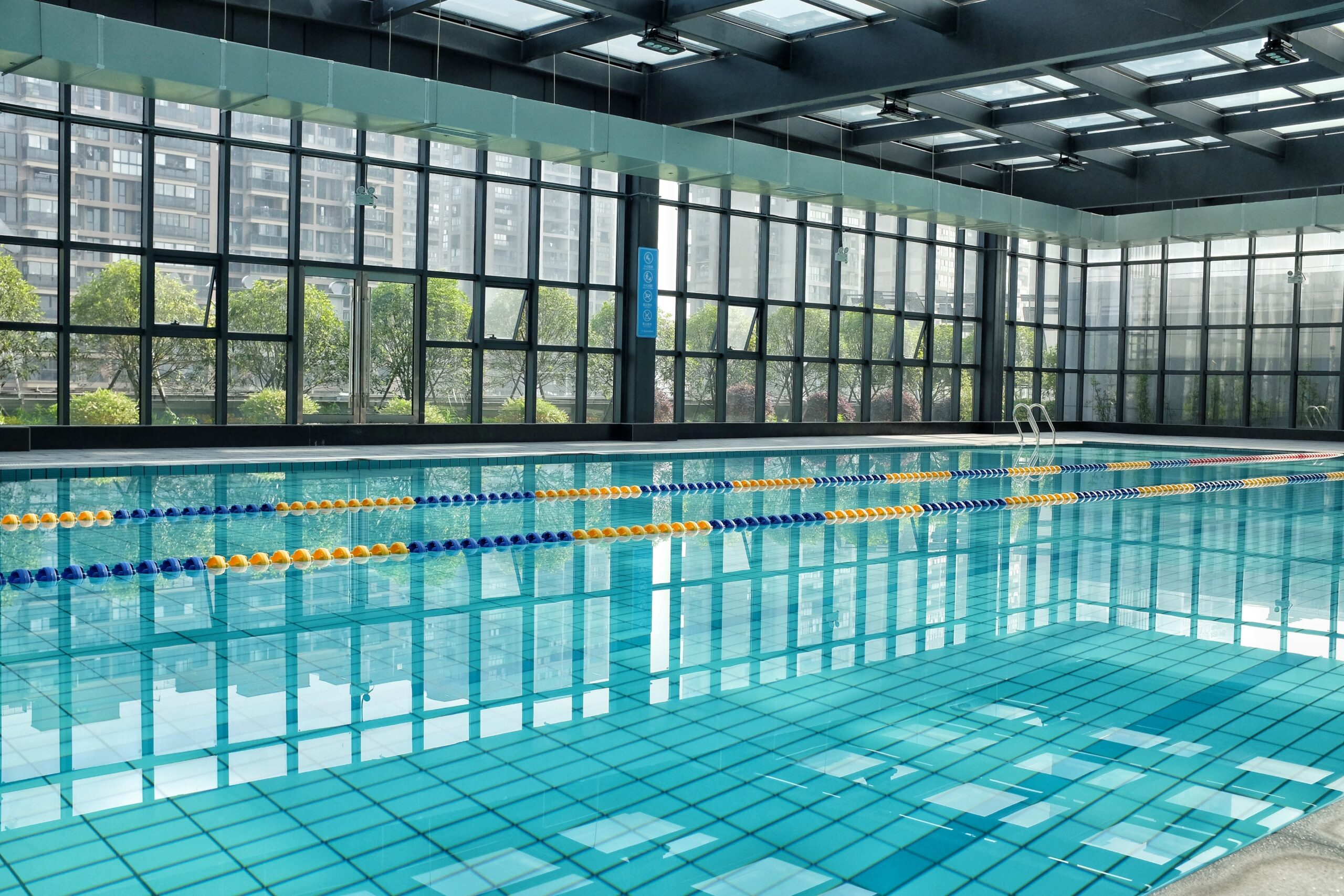
Pools, sports halls, gyms, changing rooms, showers, cafés, air handling units, pumps and heating systems all create a heavy energy load. Nobody expects a leisure centre to be cheap to run. That is not the point.
The question is whether the building is using energy at the right times, in the right places, and at the right level.
A swimming pool plant room can quietly waste money at 2am while everyone is focused on the next budget meeting. Ventilation can run too hard. Pumps can operate for longer than required. Heating can continue after areas are empty. Changing rooms can be conditioned as though peak usage is happening all day.
These are not always obvious faults. Often, the building still “works”. People arrive, swim, shower and leave. The issue only becomes visible when energy use is monitored in real time and compared with how the building is actually being used.
That distinction matters. High energy use is expected in leisure. Avoidable waste is not.
Hybrid working has changed council offices
Many council offices are being used differently now.
Hybrid working has changed occupancy patterns. Some buildings are busy in the middle of the week and noticeably quieter on Mondays or Fridays. Meeting rooms may be used sporadically. Whole floors may sit half-empty for long periods.
The difficulty is that building systems do not always adapt automatically to those changes.
Heating, cooling, lighting and ventilation schedules may still reflect old working patterns. A building can be treated as fully occupied even when only a portion of it is in regular use. In practical terms, that means councils may be paying to heat, cool or ventilate space that does not need to be treated in the same way.
Anyone who has walked through a half-empty office on a Friday afternoon will recognise the problem. The lights are on, the air is moving, the systems are doing what they were told to do. The question is whether anyone has looked recently at whether those instructions still make sense.
Real-time visibility helps answer that question with evidence rather than guesswork.
Libraries, community hubs and public buildings with changing usage
Libraries and community buildings are another good example because their usage can vary so much.
A library might be busy during certain windows of the day, quiet at others, and used in the evening for meetings or community events. One room may be occupied while the rest of the building is not. Heating an entire building for a small group in one space is sometimes unavoidable, but often it is simply the result of limited control and limited information.
Community hubs can have similar issues. They may host advice sessions, children’s activities, local groups, warm spaces, council services and evening meetings. That variability is precisely what makes them valuable public assets. It is also what makes them difficult to manage from an energy perspective.
Potential waste can sit in:
- Heating schedules that do not match actual occupancy.
- Lighting left on in low-use areas.
- Portable heaters or fans introduced because the main system is poorly balanced.
- Ventilation running after rooms are empty.
- Controls that nobody wants to adjust because nobody is quite sure what effect it will have.
This is where we think councils deserve some sympathy. When a building serves the public, comfort and reliability come first. Nobody wants to make a library cold or a community centre unpleasant. The point of better monitoring is not to compromise the service. It is to understand where comfort is being delivered inefficiently.
Depots and workshops: the overlooked energy users
Council depots are often less visible in public discussions about energy, but they can be full of opportunities.
A depot might include offices, vehicle workshops, stores, external lighting, compressors, wash-down areas, charging infrastructure, roller doors, heating systems and equipment that gets used in short bursts throughout the day.
This is where energy waste can become very practical.
Compressed air leaks. Workshop heating escaping through open doors. External lights running longer than needed. Equipment left energised overnight. Electric vehicle charging adding new load patterns that nobody has yet fully mapped.
None of these are glamorous issues. They are not the sort of thing that make the front page of a council sustainability strategy. But they add up.
And because depots are operationally busy places, waste can easily become part of the background noise. People are focused on getting vehicles out, responding to service needs and keeping the borough moving. Energy use is rarely the loudest problem in the yard.
That is exactly why visibility matters.
Schools and education buildings: waste hiding in the calendar
Schools bring another layer of complexity.
Even where schools manage their own budgets, many Local Authorities still have relationships, responsibilities or influence across the education estate. School buildings are also notoriously variable in how they use energy.
Term times. Holidays. INSET days. After-school clubs. Sports facilities. Kitchens. IT rooms. Temporary classrooms. Older heating systems. New extensions connected to older plant.
Waste may not look dramatic. It might simply be a heating schedule that made sense in October but is still running the same way in February. Or a building being heated during a holiday period because nobody had clear visibility of what was actually happening. Or a sports hall consuming energy long after the last booking has ended.
Again, this is not about blame. Schools are busy environments. Site teams are stretched. Teachers are focused on pupils, not kilowatt-hours.
But if a council is serious about reducing cost and carbon across an education estate, it needs more than annual reporting. It needs to know where the avoidable waste is occurring and what can be done without disrupting the school day.
Civic halls, museums and heritage buildings: awkward buildings need better evidence
Many Local Authorities also manage older civic buildings, museums, halls and heritage properties.
These buildings can be difficult. Thick walls. High ceilings. Draughts. Listed features. Irregular events. Basement plant rooms. Heating systems added at different times by different contractors.
Anyone who has ever sat in an old civic hall will know the strange combination: one part of the room too warm, another part slightly chilly, and a heating system working very hard to disappoint everyone equally.
With heritage and civic buildings, the answer is not always straightforward. There may be limits on fabric improvements. There may be comfort requirements for visitors, staff, collections or events. But that makes evidence more important, not less.
Before spending money on major upgrades, councils need to understand how these buildings actually perform.
- When is energy being used?
- Which systems are driving the load?
- Are spaces being conditioned too early before events?
- Are systems running long after people have left?
- Are there simple operational changes that could reduce waste before capital projects are considered?
Without that information, decisions become harder than they need to be.
LED lighting helped, but it did not finish the job
Many councils have already done sensible energy-saving work.
LED street lighting is a good example. So are boiler replacements, building management system upgrades, insulation projects, solar installations, behaviour campaigns and grant-funded decarbonisation schemes.
These projects matter.
But one of the mistakes we see in energy conversations is the assumption that once the obvious projects have been completed, the estate must be broadly under control.
In practice, energy efficiency is not a one-off exercise. Buildings drift over time as settings are adjusted, usage patterns change, equipment gets older, controls are tweaked by contractors, and systems are occasionally overridden by staff. A well-intentioned change in one area can create waste somewhere else.
This is why monitoring and targeting is so important. It keeps the conversation live. It tells you whether savings have actually stuck. It helps spot when performance begins to slide.
A council can do all the right things on paper and still have avoidable waste hiding in the estate.
The real issue is invisibility
Energy waste is frustrating because it is usually boring.
It is not always a dramatic fault. It is often a timer, a setting, a pattern, a leak, a schedule or a piece of equipment quietly doing the wrong thing for longer than it should.
That is why monthly bills are such a blunt instrument. They tell you the total. They do not tell you the story.
By the time a bill shows an issue, weeks may have passed. Someone then has to investigate. Was it the weather? A tariff change? A new tenant? A faulty asset? Longer opening hours? A control problem? A meter issue?
With better monitoring, those questions can be answered much earlier and with far more confidence.
At Enerwise, this is the point we keep coming back to. We are not asking organisations to switch energy providers. We are not starting the conversation by trying to install renewable technology. Those may be valid conversations elsewhere, but they are not where we begin.
We begin with the gap.
Where is the organisation today? Where could it realistically get to? What is likely being wasted? What can be improved quickly? What needs deeper monitoring? What would a sensible plan look like?
Why a Gap Analysis is a useful starting point for Local Authorities
For Local Authorities, a Gap Analysis is a practical first step because it does not ask the council to commit to a major project before understanding the opportunity.
It gives estates, facilities, finance and sustainability teams a clearer view of where energy waste may exist and where the quickest gains might be found.
That matters because council teams are under pressure from all sides. They need evidence. They need priorities. They need to know which buildings deserve attention first. They need to avoid spending money in the wrong order.
Sometimes the first opportunities are simple. These include adjusting schedules, reviewing out-of-hours consumption, comparing similar buildings, and identifying unusual baseloads. Spotting assets that run continuously when they should not.
Sometimes the findings point towards the need for real-time, asset-level monitoring so the council can see exactly what is happening and keep improvements on track.
Either way, the value is in starting with evidence.
A more grounded way to approach public sector energy savings
The Local Authority sector does not need vague sustainability language. It has enough of that already.
It needs practical conversations about buildings, budgets, comfort, operational reality and the invisible waste that sits between intention and outcome.
A library should not cost more to run than it needs to.
A leisure centre should not have plant running unnecessarily through the night.
A depot should not be leaking energy because nobody has the data to spot it.
A civic building should not be heated in the same way for a small evening meeting as it is for a full public event.
And council teams should not be expected to find all of this from bills, spreadsheets and occasional audits.
Once a Local Authority can see where energy is going, it can make better decisions about what to fix, what to monitor, what to invest in and what to leave alone.
That is where real energy efficiency begins: with a clear view of the gap between current performance and what is genuinely achievable, rather than guesswork or another strategy document.