Why energy monitoring matters in managed buildings where usage, costs and accountability are shared
In many managed buildings, energy costs are included within rent, service charges or wider occupancy costs. On the surface, this can make administration simpler. But it also raises an important question for landlords, managing agents and tenants:
How accurately are those energy costs being allocated?
Where buildings have multiple occupiers, energy use is rarely equal. A café, gym, salon, clinic or convenience store will often have a very different energy profile from a small office, bookshop or professional services tenant. Refrigeration, catering equipment, extended opening hours, ventilation, hot water and heating or cooling requirements can all make a significant difference.
Without clear visibility of usage, it becomes difficult to know whether each tenant is paying a fair proportion of the overall cost.
Why fairness matters
Energy has become too significant to treat as a background overhead.
Tenants want confidence that they are not subsidising another occupier’s usage. Landlords and managing agents want to recover costs fairly, avoid disputes and demonstrate that the building is being managed responsibly.
The challenge is that traditional billing information rarely provides enough detail. A monthly bill may show total consumption, but it does not explain which areas, systems or tenants are driving that cost.
That lack of visibility can create uncertainty for everyone involved.
Energy waste is often hidden
Most energy waste is not obvious. It can come from equipment running outside required hours, shared systems operating inefficiently, heating and cooling working against each other, or lighting and plant left on when spaces are unoccupied.
In a managed building, these issues can be harder to identify because consumption is spread across common areas, tenant spaces, plant rooms and shared infrastructure.
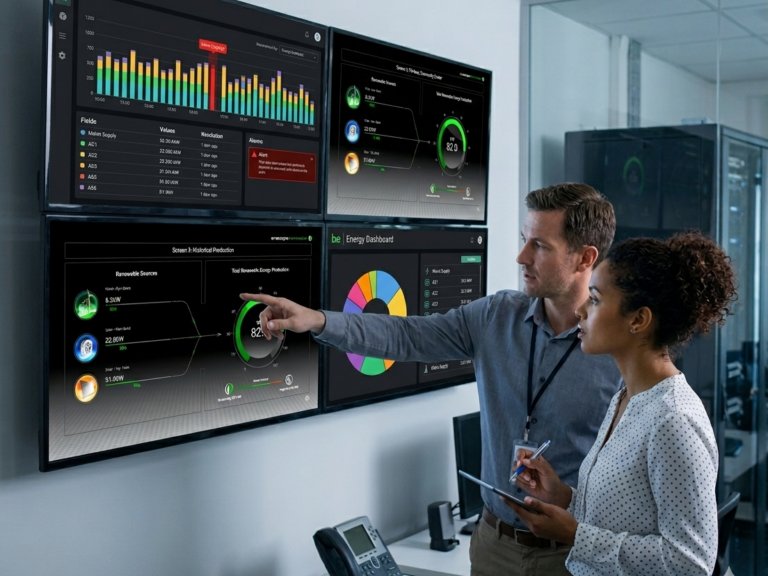
Real-time monitoring helps make that usage visible. It allows building owners and managers to see where energy is being consumed, where waste may be occurring, and where action could reduce unnecessary cost.
Better data supports better decisions
Accurate energy data gives landlords, managing agents and tenants a stronger basis for decision-making.
For landlords and managing agents, it can support fairer cost allocation, clearer tenant conversations, better operational control and improved reporting.
For tenants, it can provide reassurance that charges are based on evidence rather than assumptions. It can also help them understand their own consumption and identify opportunities to reduce waste.
This is not simply a billing issue. It is a trust issue.
A building where energy usage is better understood is easier to manage, easier to explain and easier to improve.
Sustainability starts with measurement
Many tenants now have their own sustainability commitments, reporting requirements or internal targets. Landlords are also under increasing pressure to demonstrate that their buildings are being managed efficiently.
But credible sustainability work starts with evidence.
Before any organisation can reduce energy waste, improve performance or report progress, it needs to understand current usage. Monitoring provides that baseline and helps identify the gap between where the building is today and where it could realistically get to.
A list of relevant sustainability and efficiency standards can be found at the bottom of this article where real time energy monitoring, reporting and management can offer a rapid acceleration towards accreditation — for example ISO 14001, Net Zero commitments, landlord ESG reporting, tenant sustainability requirements, & other confirmed standards.
Why a Gap Analysis is the sensible first step
Before making decisions about technology, equipment upgrades or changes to tenant charging models, it is worth understanding the scale of the opportunity.
Enerwise starts with a complimentary Gap Analysis. This helps identify where energy is being used, where waste may be hidden, and whether tenant-level monitoring could create a fairer, clearer approach.
The aim is not to switch providers or install renewable energy products. It is to give building owners and managers a practical view of the gap between current performance and achievable improvement.
In some buildings, the findings may highlight quick wins that require little or no capital investment. In others, they may show that real-time monitoring and targeting would provide the evidence needed to manage energy more accurately over the long term.
Either way, the starting point is the same: better visibility.
Fairer energy management starts with visibility
Managed buildings bring together different occupiers, different operating hours, different equipment and different levels of energy demand.
Without accurate monitoring, it is difficult to know whether costs are being allocated fairly or whether avoidable waste is being missed.
With better visibility, landlords and managing agents can make more informed decisions, tenants can have greater confidence in what they are being charged, and the building as a whole can move towards lower costs and improved energy performance.
Relevant Standards
Any business attempting to reach accreditation in the following standards will be given a huge boost from our solutions
Energy Efficiency Standards
- ISO 50001: The core framework for establishing an Energy Management System (EnMS) using the Plan-Do-Check-Act cycle to optimize consumption.
- ISO 50002: Guidelines for carrying out industrial or commercial energy audits to spot waste.
- ISO 50006: Instructions on setting energy performance indicators and baselines.
- ISO 50015: Methods for measuring and verifying actual energy savings. [1, 2, 3]
Sustainability and Environmental Standards
- ISO 14001: Requirements for an Environmental Management System (EMS) to minimize ecological harm.
- ISO 14064: Specifications for quantifying, monitoring, and reporting greenhouse gas emissions and removals.
- ISO 26000: Guidance on social responsibility, covering ethical governance and community impact.
- ISO 14007 / 14008: Tools to assess environmental costs, benefits, and economic risks.