The problem isn’t a lack of ambition, it’s a lack of visibility.
Walk into almost any boardroom and you’ll hear similar energy objectives being discussed.
- Reduce costs.
- Improve sustainability performance.
- Meet compliance requirements.
- Support Net Zero commitments.
- Create more predictable budgets.
They’re all sensible goals. The challenge is that many organisations are trying to achieve them using information that is already out of date.
For years, energy management has been built around historical data. Monthly bills. Quarterly reviews. Annual audits. Forecasting models that attempt to predict future consumption based on what happened yesterday.
The intention is good. The limitation is obvious. You cannot manage what you cannot see. And in most organisations, energy waste remains largely invisible.
The forecasting trap
Forecasting certainly has its place. Finance teams need budgets. Operations teams need predictability. Sustainability teams need targets.
But forecasting alone doesn’t reduce energy consumption.
At best, it estimates what might happen.
I’ve often compared it to weather forecasting. Meteorologists can make increasingly accurate predictions, but the weather still has a habit of doing its own thing. The same is true of energy consumption.
- A production schedule changes.
- A piece of equipment begins operating inefficiently.
- An HVAC system runs overnight when nobody is there.
- A refrigeration unit starts drawing more power than normal.
Suddenly the forecast and reality are no longer aligned.
The problem isn’t the forecast. The problem is relying on it as your primary management tool.
Why energy waste hides in plain sight
One of the most interesting statistics in energy efficiency is that organisations can often be wasting significant amounts of energy without realising it. Not because they’re careless, but because the information simply isn’t available at the level required to spot the issue.
Most businesses can tell you what their total electricity bill was last month.
Far fewer can tell you:
- Which assets consumed the most energy yesterday
- Which equipment is operating outside normal parameters
- Whether systems are running when buildings are unoccupied
- Where consumption has increased unexpectedly
- Which actions would generate the fastest savings
Without that visibility, waste becomes part of normal operations.
It sits quietly in the background, month after month, hidden inside a larger utility bill.
The shift from historical reporting to real-time management
This is where the conversation changes.
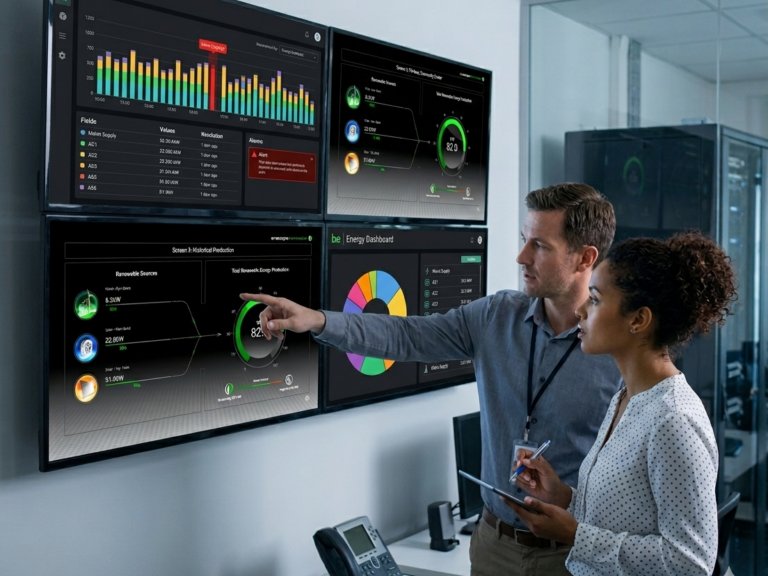
The organisations achieving the most meaningful reductions in energy consumption are no longer looking backwards. They’re monitoring what is happening right now.
Real-time asset-level monitoring provides something that historical reporting never can: actionable intelligence.
Instead of waiting for next month’s bill, organisations can identify:
- Areas of overconsumption
- Equipment operating inefficiently
- Emerging maintenance issues
- Unexpected behavioural patterns
- Opportunities for immediate corrective action
The difference is significant. One approach tells you what happened. The other helps you influence what happens next.
Before solar panels, before new equipment, before major investment
This is perhaps the biggest misconception in energy management today.
Many organisations assume the journey starts with renewable energy projects, equipment replacement programmes or expensive infrastructure upgrades.
In reality, the first step is usually understanding where energy is being used, where it is being wasted, and where the quickest gains exist.
Only then can investment decisions be made with confidence.
I’ve seen organisations spend considerable sums on efficiency projects while still lacking a clear understanding of where their largest opportunities actually sit. That’s a bit like deciding on a treatment before you’ve completed the diagnosis.
The most effective energy strategies begin with evidence.
Why we start with a Gap Analysis
At Enerwise, we don’t begin by recommending technology. We begin by understanding the gap.
- The gap between current performance and achievable performance.
- The gap between what an organisation believes is happening and what the data ultimately reveals.
That’s why every engagement starts with a complimentary Gap Analysis. We work with the client to gather key information, establish a realistic benchmark, identify potential areas of waste and create a practical roadmap for improvement.
Sometimes there are quick wins that require little or no investment at all. Sometimes the findings justify a deeper monitoring and targeting programme.
Either way, the conversation starts with facts rather than assumptions.
The future belongs to organisations that can see their energy
Energy prices will continue to fluctuate. Sustainability expectations will continue to rise. Reporting requirements will become more demanding.
None of that is likely to change. What will change is the ability of organisations to make informed decisions.
The businesses that gain a competitive advantage won’t necessarily be the ones spending the most on energy projects.
They’ll be the ones with the clearest visibility of where their energy is going, where waste exists, and what actions will deliver the greatest return.
Because before you can improve energy performance, you first need to see it. And that’s where the real journey begins.